In modern industrial operations, the need to handle heavy loads efficiently and safely is a constant challenge. While single gantry cranes are widely used for lifting and transporting materials, certain applications demand higher lifting capacity than what a single crane can safely provide. In such cases, tandem operation, where two gantry cranes work together to lift a single load, becomes an effective solution. This article explores the principles, benefits, design considerations, and safety measures involved in using two 20-ton gantry cranes in tandem to achieve higher capacity lifting.
Understanding Tandem Operation
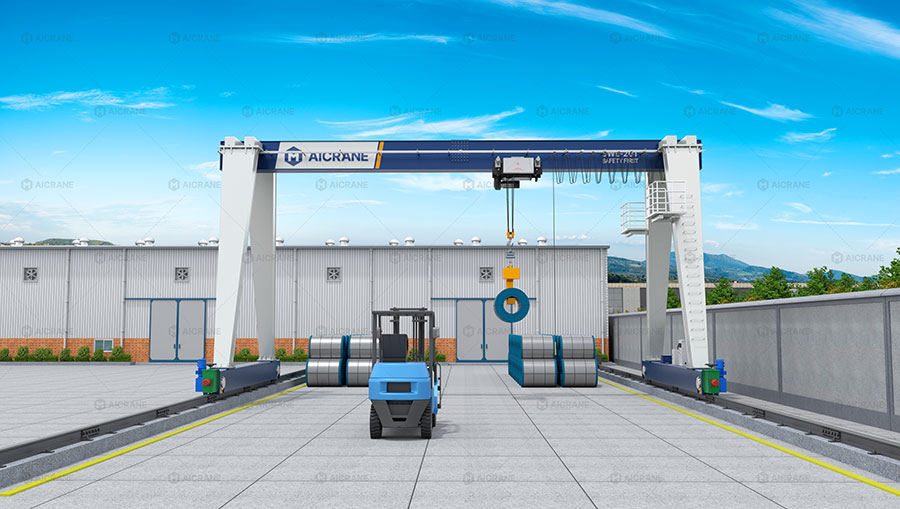
Tandem operation refers to the coordinated use of two cranes to lift and move a load that exceeds the rated capacity of a single crane. When two 20 ton gantry cranes are used in tandem, they can theoretically handle a combined load of up to 40 tons. However, the actual safe lifting capacity depends on several factors including crane positioning, load distribution, synchronization, and the structural limitations of the cranes and the supporting infrastructure.
The concept of tandem lifting is commonly applied in industries such as steel manufacturing, precast concrete production, shipyards, and heavy machinery assembly. Loads like steel beams, large molds, precast concrete components, or machinery often exceed the lifting capacity of a single crane, making tandem operation a practical necessity.
Advantages of Tandem Operation
Using two 20-ton gantry cranes together provides multiple advantages:
-
Increased Lifting Capacity
Tandem operation effectively doubles the lifting potential of individual gantry cranes, allowing facilities to handle heavier loads without investing in larger, more expensive cranes. -
Flexibility in Operations
Two smaller cranes can maneuver in spaces where a single large-capacity crane might be impractical. This flexibility is especially valuable in constrained workshop environments. -
Cost Efficiency
Deploying two 20-ton cranes in tandem can be more economical than purchasing a single 40-ton crane. Smaller cranes often have lower operating costs, require less maintenance, and are easier to transport and install. -
Redundancy and Safety
In some cases, tandem operation provides a level of redundancy. If one crane experiences minor issues, the other may temporarily hold or control part of the load, reducing the risk of load drops during complex lifts.

Design Considerations for Tandem Lifting
While tandem operation offers clear benefits, achieving safe and efficient lifting requires careful planning and design. Key considerations include:
1. Load Distribution
Proper load distribution is critical. The weight must be shared equally between the two cranes. Unequal load sharing can lead to overloading one crane, creating potential structural failures or operational hazards. Load calculations should consider both vertical and horizontal load distribution, as well as any dynamic effects caused by swinging or shifting loads.
2. Crane Positioning
Correct positioning of the cranes along the load’s length is essential. The cranes must be aligned precisely to prevent tilting or uneven lifting. Adjustable crane spacing may be necessary to accommodate different load sizes.
3. Synchronization
Synchronization is one of the most important factors in tandem operation. Both cranes must lift, lower, and travel in perfect coordination. Discrepancies in hoist speed, trolley movement, or traveling can induce stress on the load, the cranes, and the supporting structures. Modern systems often use PLC-based control or radio remote control with tandem synchronization features to ensure both cranes operate in harmony.
4. Rigging and Lifting Gear
Selecting the correct rigging is essential. Slings, spreader beams, and shackles must be rated for the total load and designed to maintain balance between the two cranes. Spreader beams are often used to distribute weight evenly and reduce stress on the load during tandem lifts.
5. Structural Capacity
Both cranes, the supporting beams, and the floor or rails must be able to accommodate the combined load. Before performing tandem lifts, engineers should verify that all structural components can handle the forces imposed by lifting, including dynamic effects such as acceleration and deceleration of the cranes.
Safety Measures in Tandem Operation
Safety is paramount in tandem industrial gantry crane operations. The following measures should be observed:
-
Pre-Lift Planning
Detailed lift planning should include load weight, center of gravity, crane positions, rigging configuration, travel path, and potential obstacles. -
Operator Training
Operators must be trained specifically in tandem operations. They need to understand load dynamics, synchronization techniques, and emergency procedures. -
Communication
Clear communication between operators is essential. Radio communication or integrated control systems ensure both cranes act simultaneously during lifts. -
Load Monitoring
Load cells or other monitoring devices can provide real-time feedback, ensuring the weight is evenly shared and within safe limits. -
Emergency Protocols
Operators must have contingency plans in case one crane fails during a lift. These protocols should cover load stabilization, controlled lowering, and safe evacuation procedures. -
Regular Maintenance
Both cranes must be in excellent working condition. Regular inspection of hoists, wire ropes, brakes, wheels, and structural components is essential to avoid accidents.
Applications of Tandem Gantry Cranes
Tandem operation is widely used in various industries:
-
Steel Industry: Lifting heavy steel coils or beams that exceed single-crane capacity.
-
Construction: Handling precast concrete segments for bridges or high-rise buildings.
-
Shipbuilding: Moving large engine blocks or hull sections.
-
Machinery Assembly: Transporting heavy industrial equipment, presses, or molds.
-
Warehouse and Logistics: Handling oversized loads that cannot be accommodated by standard single gantry cranes.
In all these applications, tandem operation not only increases capacity but also improves workflow efficiency and safety.
Best Practices for Using Two 20-Ton Cranes in Tandem
-
Pre-Lift Simulation: Use software or crane simulators to model the lift before executing it.
-
Load Testing: Conduct test lifts to ensure both cranes can handle the load in coordination.
-
Marking and Measuring: Clearly mark the lift points and measure distances to ensure proper alignment.
-
Gradual Lifting: Start with slow, incremental lifts to monitor load balance and crane performance.
-
Continuous Monitoring: During the lift, constantly monitor crane synchronization, load distribution, and environmental conditions such as wind or vibrations.
Conclusion
Tandem operation of two 20-ton gantry cranes is a practical solution for industries requiring heavy lifting beyond the capacity of a single crane. By carefully planning the lift, ensuring proper crane alignment, synchronizing movements, and prioritizing safety, operators can achieve higher lifting capacities efficiently and reliably. This method provides flexibility, cost-effectiveness, and operational safety while extending the capabilities of existing cranes.
As industrial demands continue to grow, tandem crane operation remains an indispensable strategy for lifting and transporting oversized or heavy loads, demonstrating that careful engineering, coordination, and adherence to safety practices can maximize both capacity and productivity.